



(2001-2003) Zayed Sports City District Cooling
client : The National Central Cooling Company P.S.J.C, aka Tabreedtypology : Industrial
services : Architecture
where : Abu Dhabi United Arab Emirates
VIDEO: https://www.instagram.com/tv/CVXTEOGFUFb/
Tabreed’s Abu Dhabi District Cooling Plant: A Monument to Utility, Metaphor, and Urban Theatre
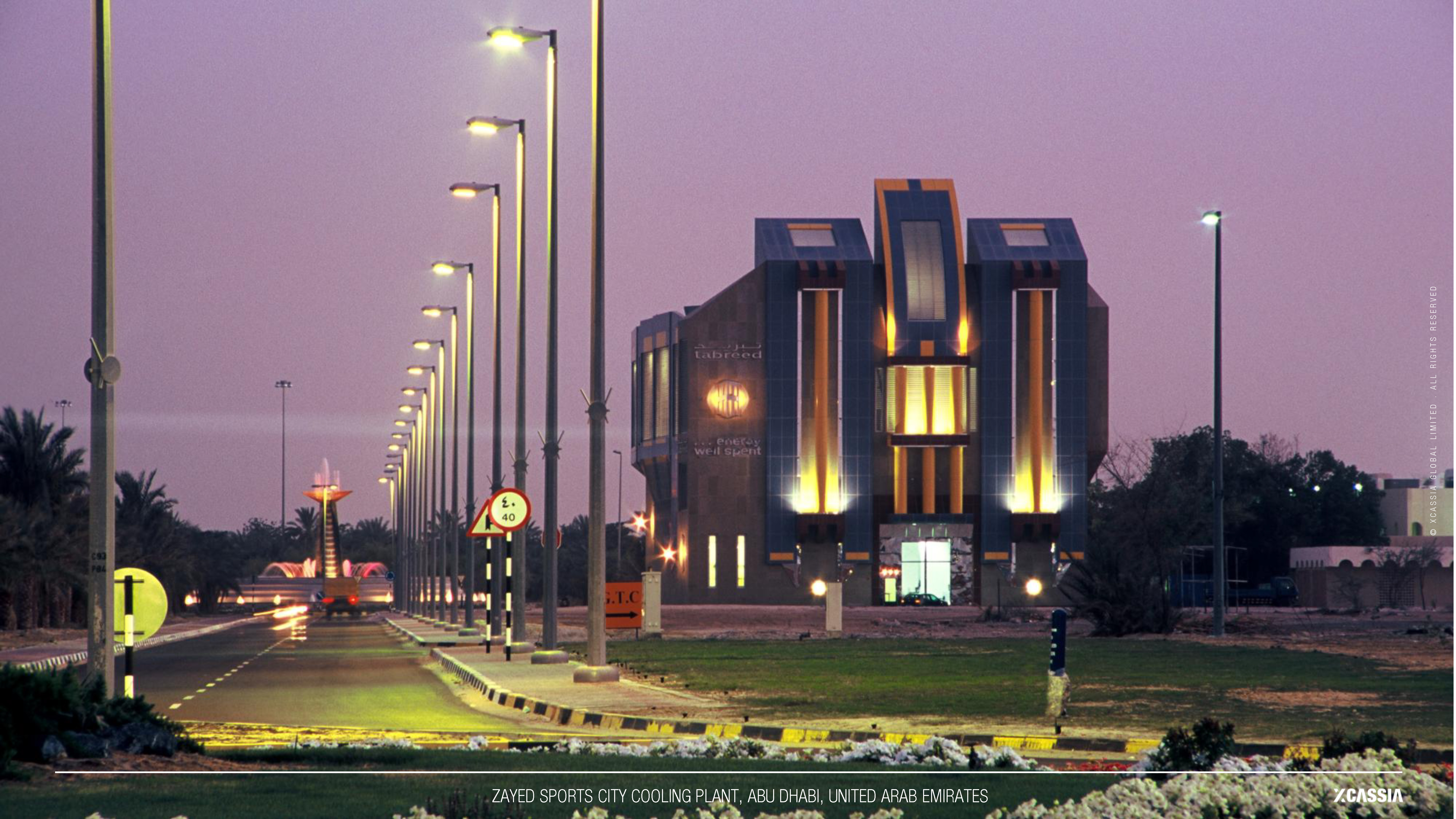
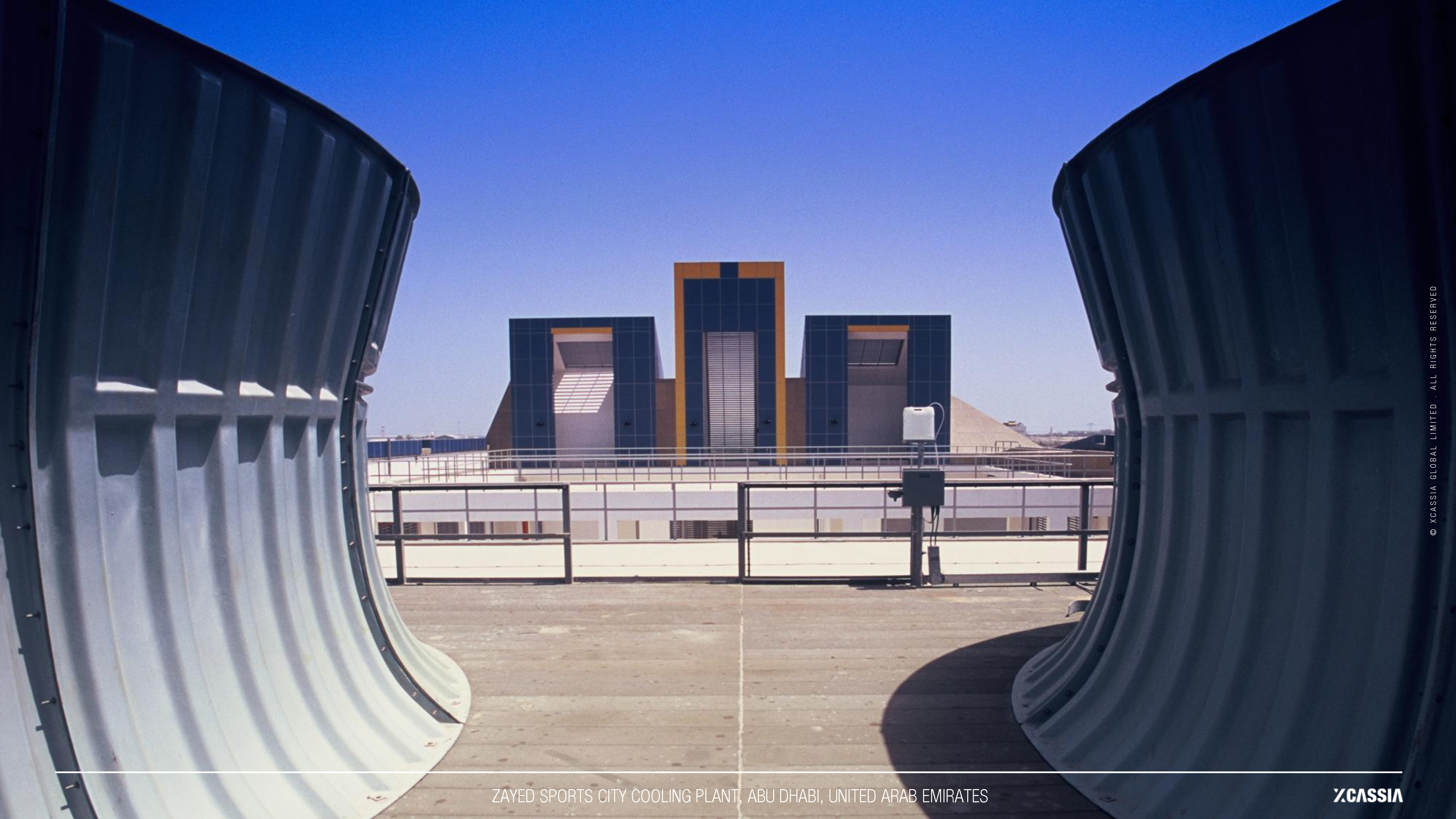
Set against the arid backdrop of Abu Dhabi’s Sheikh Zayed Grand Stadium precinct, the National Central Cooling Company (Tabreed) has redefined the typology of industrial infrastructure with its flagship district cooling plant. More than a utility structure, this 20,000-ton chilling facility is conceived as an architectural metaphor for transformation—of water, of energy, and of perception. At its core, the project is an emblem of Tabreed’s pioneering role in gas-fired and electric-powered District Cooling (DC) systems in the Middle East. Offering chilled water through an underground distribution network, the building allows connected developments to abandon conventional, maintenance-heavy HVAC systems for a centralized, energy-efficient, and space-saving solution.
Programmatic Clarity Meets Expressive Form
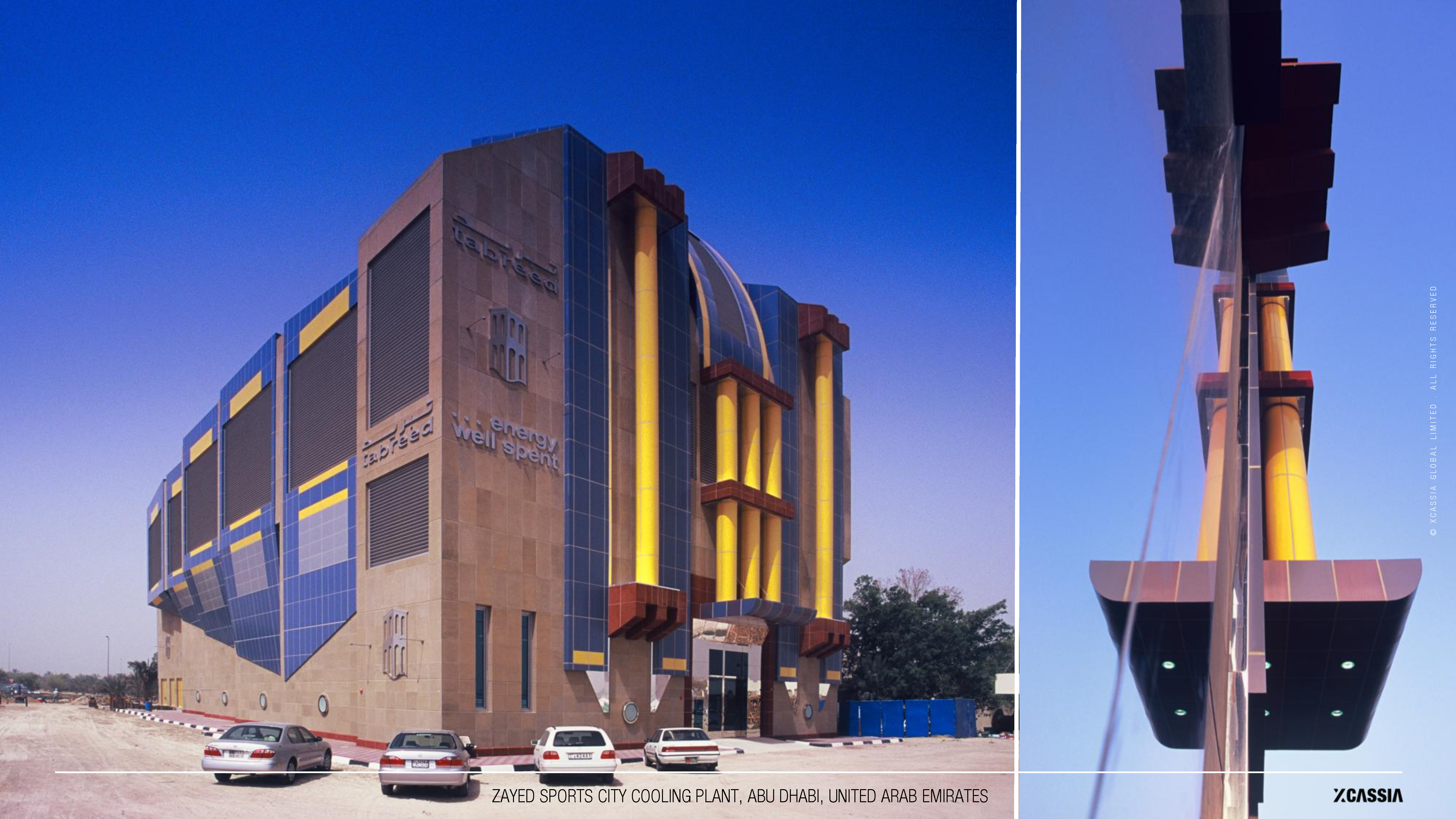
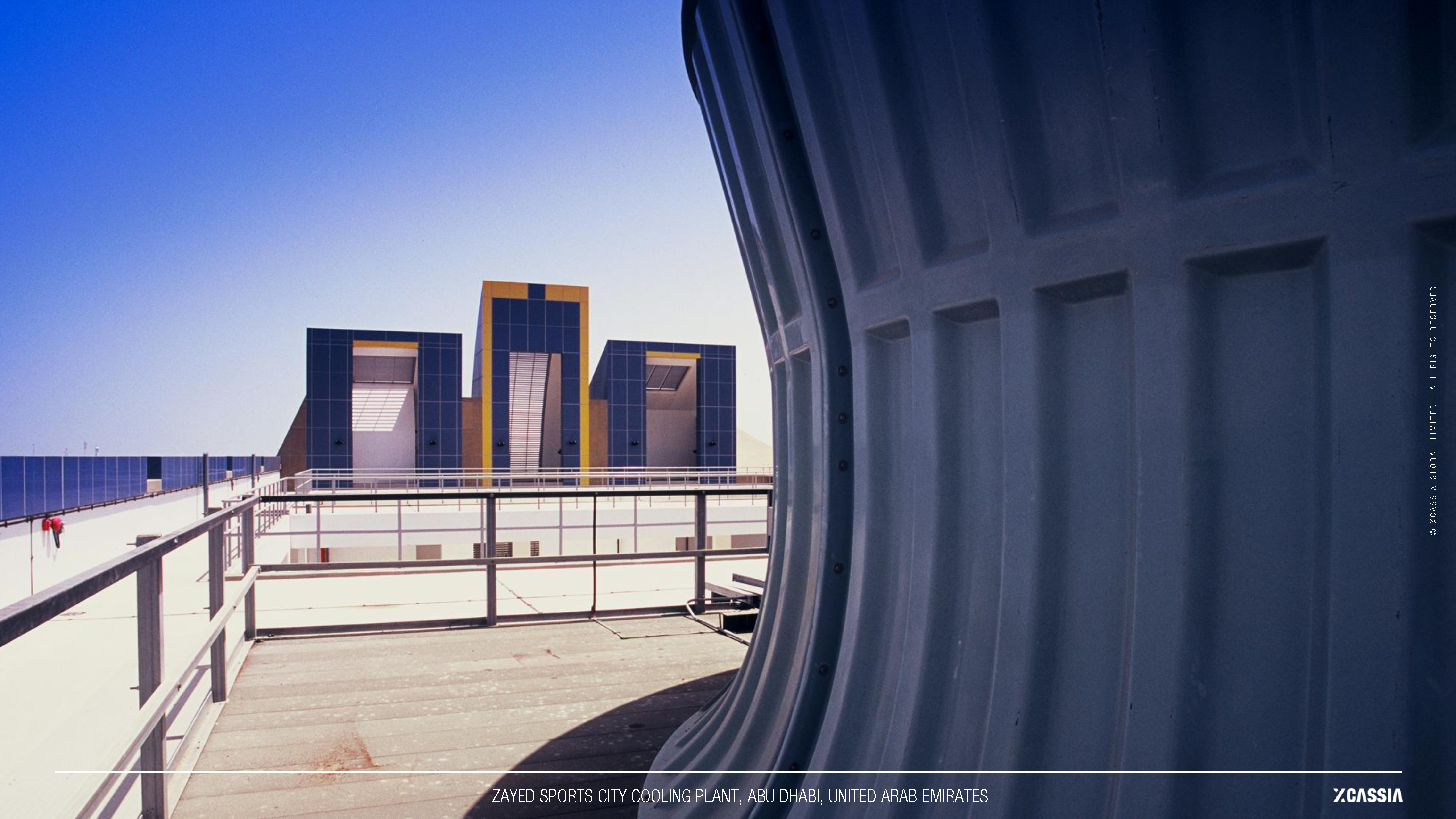
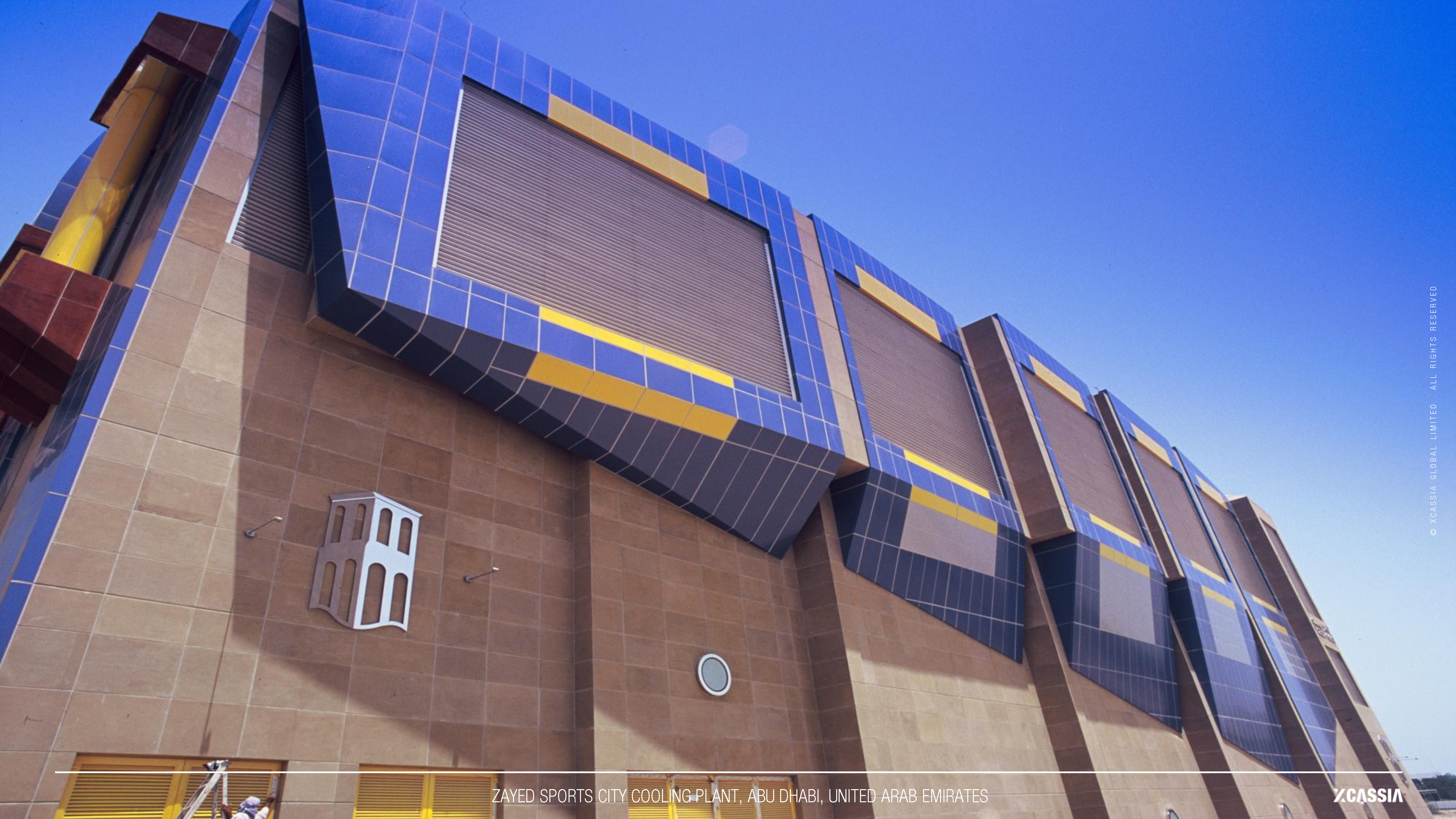
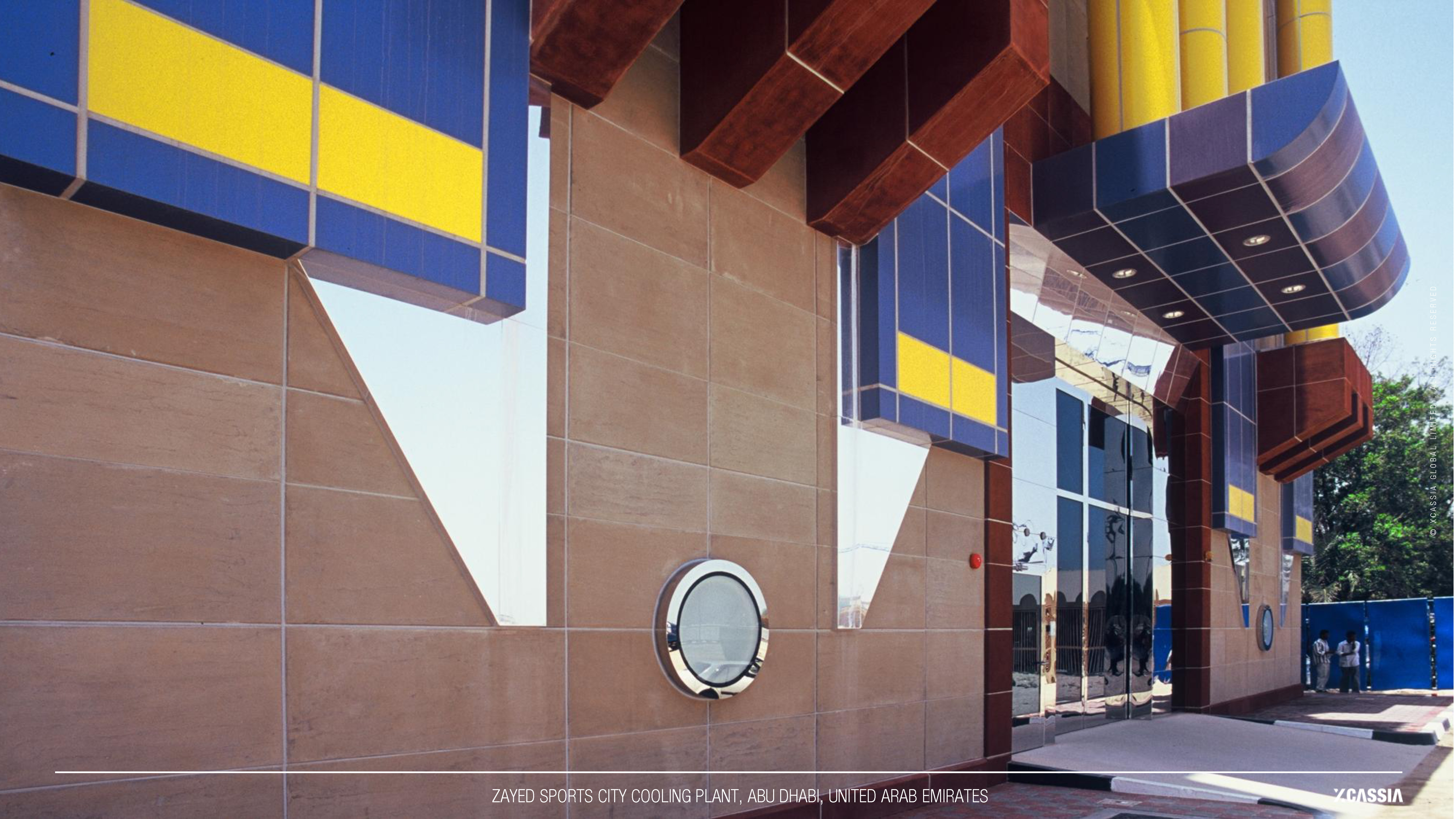
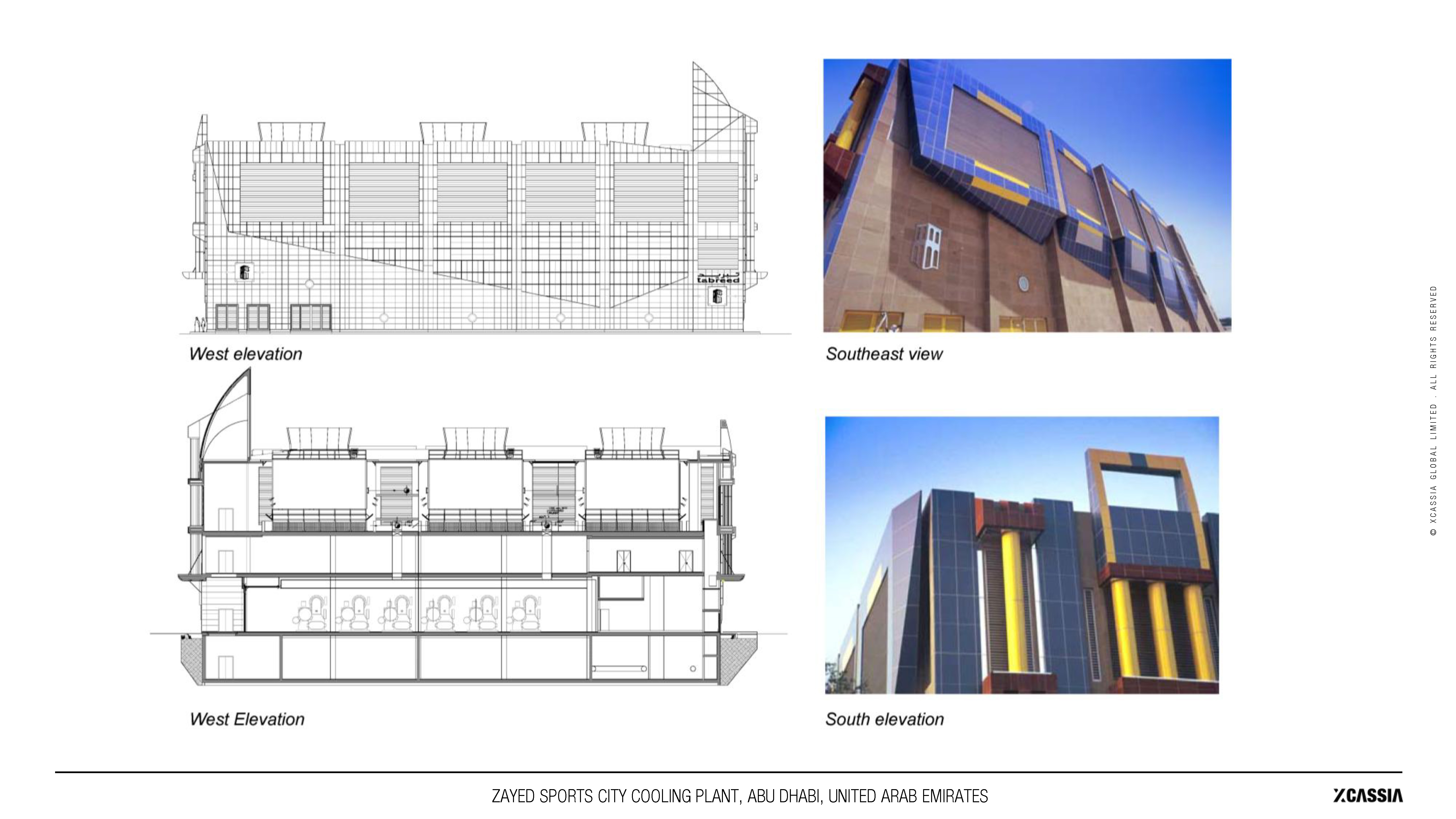
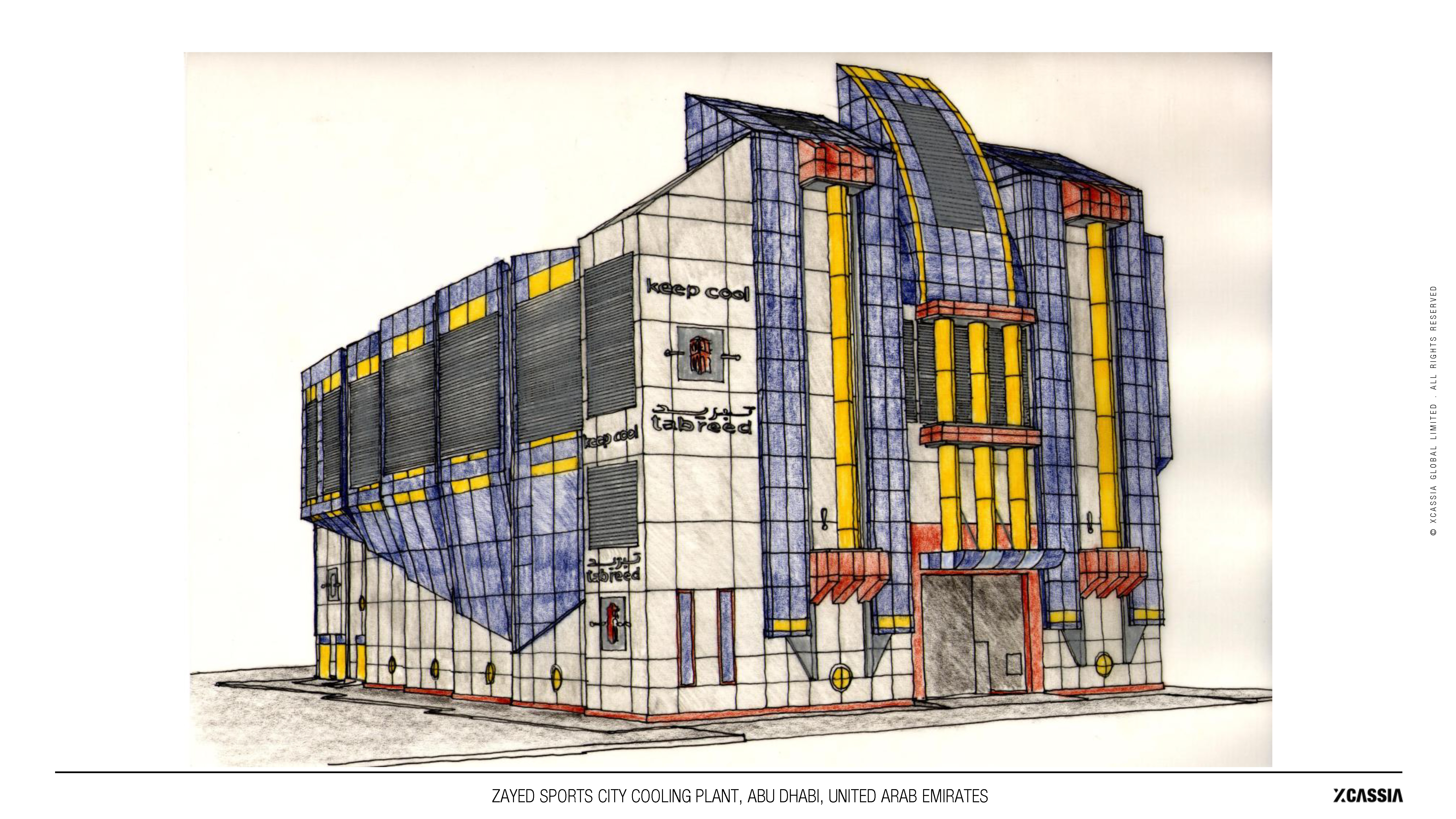
The design is governed by a deceptively simple brief: house a massive plant in a compact footprint of 1,579 m², stacked vertically over six levels. But its architectural articulation pushes far beyond functional containment. Instead of masking the plant’s technical complexity, the design celebrates the language of engineering, making it both legible and inspirational to the public. Drawing inspiration from the transitional states of water—from ambient to chilled—the building becomes a visual narrative. This concept finds expression in a color-coded façade system derived directly from engineering diagrams:
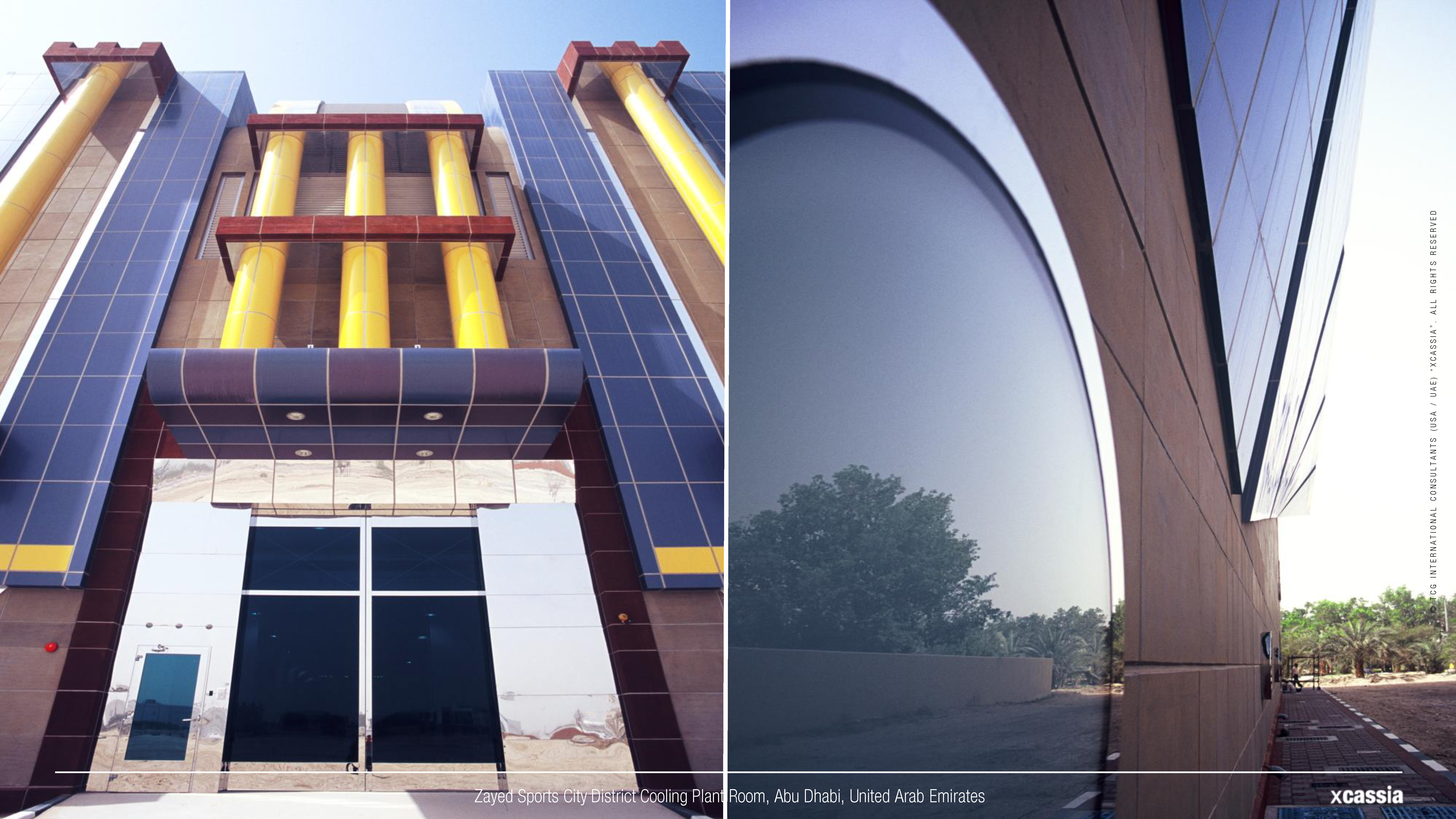
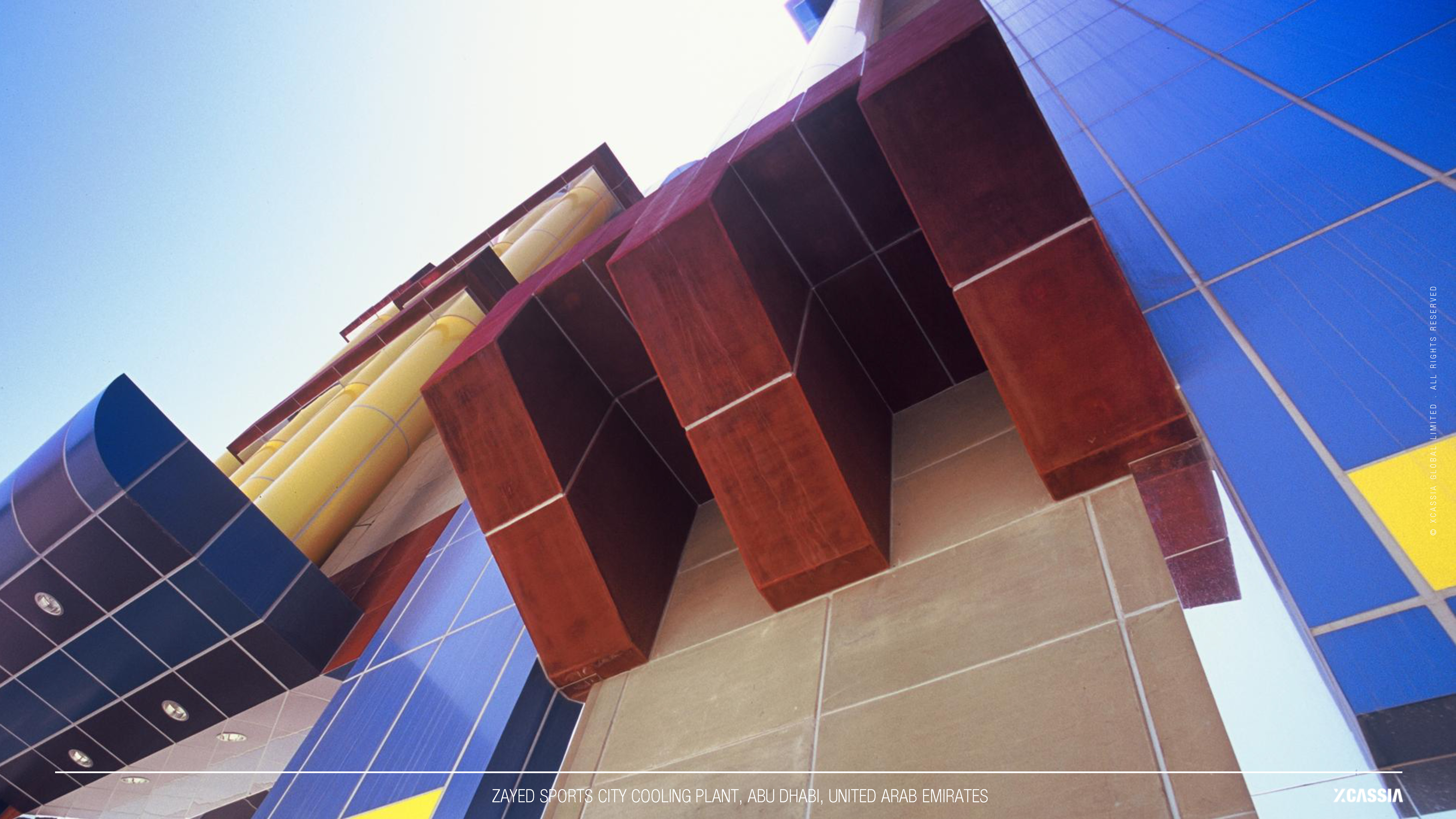
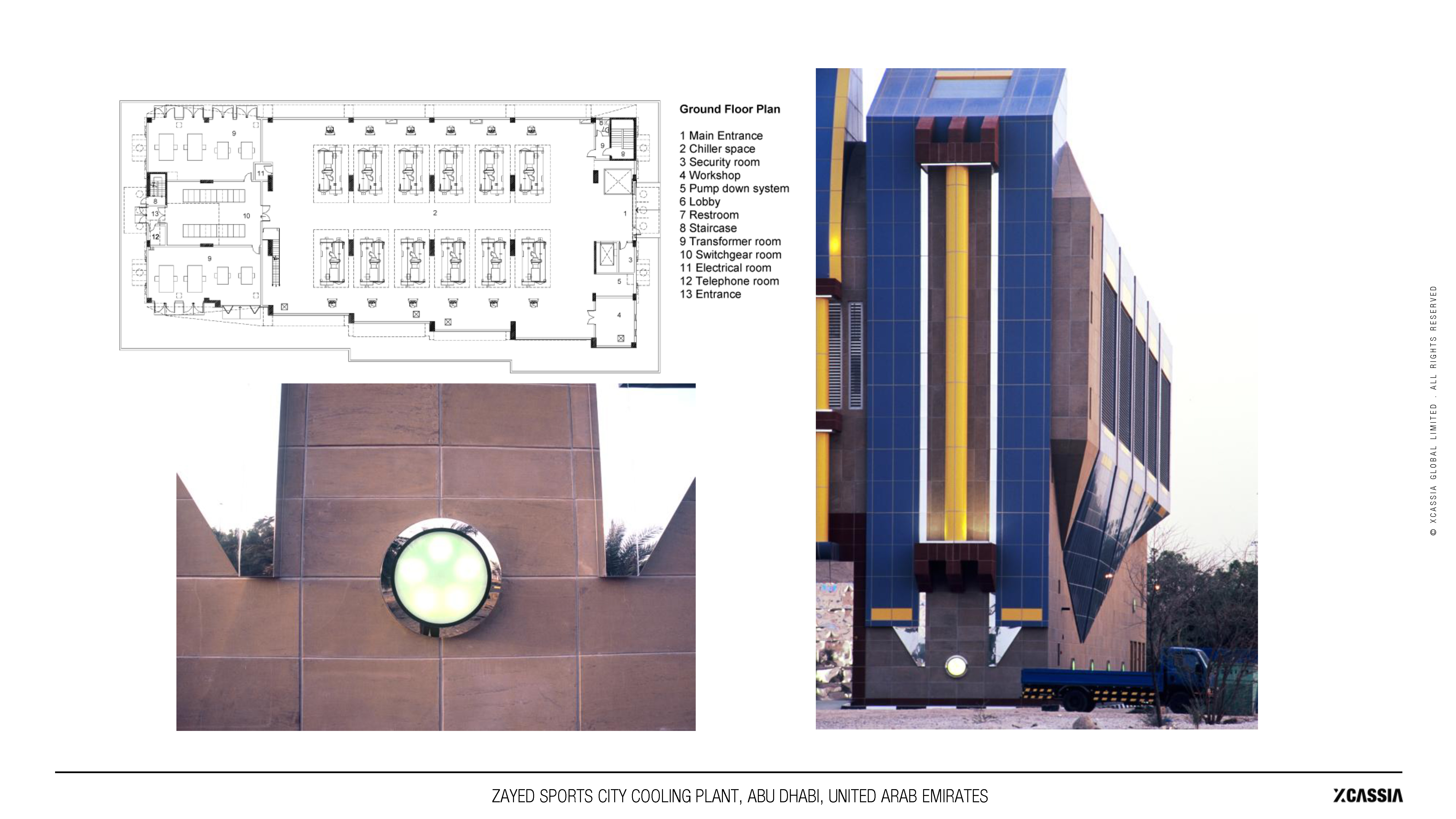
Red stone volumes symbolizing thermal energy (warm water) Blue aluminum panels representing cold water, Yellow vertical columns, composed of curved aluminum, signifying electrical current pathways
This chromatic syntax transforms a typically mute typology into a didactic structure—an urban marker educating its context on the unseen forces that support comfort and sustainability.
A Pop-Industrial Landmark
Rather than retreat into anonymity, the building adopts a language best described as Pop-Industrial. Its bold geometries, saturated hues, and layered envelopes generate a theatricality that both embraces its infrastructural identity and elevates it into urban iconography. The design deliberately contrasts the brutalist undertones of utility with playful references, thereby demystifying the facility’s function while sparking public curiosity.
Exterior lighting strategies intensify this dual identity. By day, the building’s colored volumes cast dramatic shadows. By night, strategically placed fixtures create a luminous composition that sustains the narrative of transformation around the clock.
Interior as Extension of the Machine
Internally, the building continues the theme of continuity between envelope and operation. Epoxy flooring in warm beige echoes the outer cladding, while the equipment platforms mirror the red/blue thermal logic. Steel thresholds pick up the rhythm of the yellow columns, reinforcing the connection between movement, energy, and experience. Circulation is resolved through a main staircase and freight lift on the north, complemented by a secondary southern stair leading to a mezzanine control room with full visual command over the facility.
Engineering as Aesthetic—And Agenda
In a region increasingly focused on sustainable urban systems, Tabreed’s project recasts industrial architecture as both critical infrastructure and architectural expression. As the world phases out harmful refrigerants like CFCs, district cooling stands as a key player in climate adaptation strategies. This building not only embodies that shift—but also broadcasts it.
Here, architecture is not a wrapper but a medium of communication, translating engineering logics into public language. The result is a facility that doesn’t merely cool—it educates, engages, and elevates.